Full Face & Dynamic Face Contouring: facial harmonization
Dynamic Full Face Filler is an advanced facial harmonization technique that allows you to improve your facial profile naturally, even while you're moving.
What is “dynamic” Full Face Contouring?
Dynamic Full Face is an advanced form of facial harmonization.
It is a filler treatment that harmonizes the cheekbones, chin and jaw to improve the proportions of the face.
With the dynamic technique, the result appears natural both in photos and in motion.
Face Contouring vs. Full Face
- Face Contouring: a single area is treated (e.g. cheekbones).
- Full Face: The cheekbones, jaw and chin are treated together for a global vision.
In fact, we are talking about facial harmonization .
When we think of aesthetic medicine, we usually imagine two main treatments: lip fillers and Botulinum toxin. In fact, for several years now, I've been receiving increasing requests for facial contouring procedures.
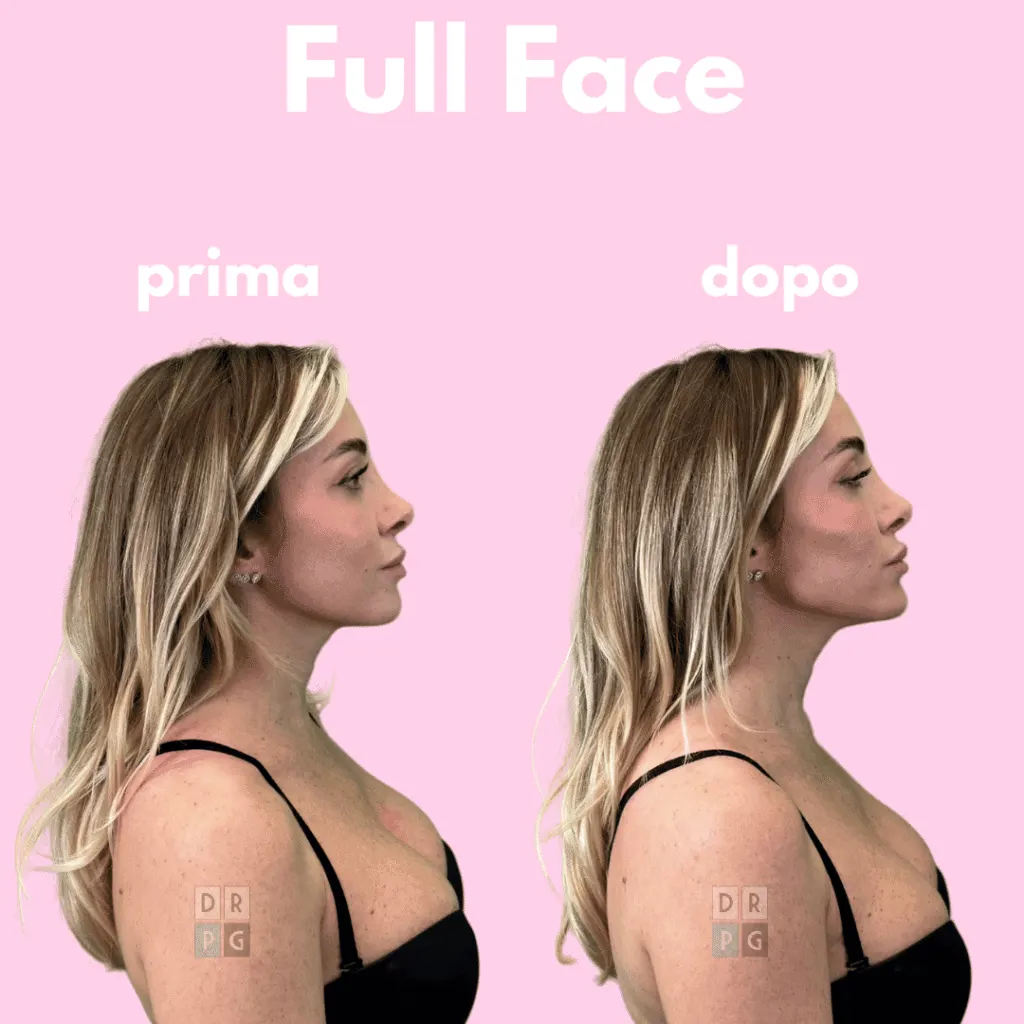
Dynamic Full Face Before and After: What's the Difference?
First: loss of definition of cheekbones, jawline and chin; less marked profile; poor three-dimensionality.
After: Harmony of facial lines, more balanced projections, defined profile and natural results even in movements.
| Treatment | Indicative cost | Note |
|---|---|---|
| Cheekbones | from €350–400 | 1 to 1.5 ml hyaluronic acid |
| Mento | from €350–400 | Improves profile and projection |
| Jaw | from €350–400 | Possible use of cannula |
| Full Face 3 areas | from €900–1200 | Complete and dynamic treatment |
🧪 RESEARCH AND INNOVATION: MY POSTER ATISAPS OF SINGAPORE 2025

In June 2025, I had the honor of presenting a scientific poster at the ISAPS World Congress in Singapore , one of the most prestigious international events in the field of aesthetic plastic surgery.
My work, entitled “Dynamic Fillers: The Effects of Fillers on Facial Expressions” , explored the effects of dynamic fillers on the face and on expressiveness, a central theme in face contouring treatments.
🎯 The goal? To achieve harmonious and natural results that don't alter facial expressions.
This experience confirms my ongoing commitment to research and training, to always offer you up-to-date and safe techniques.
🎯 Do you have a question or want to speak directly with us?
Just write to me here and we'll get back to you right away!
| Feature | Face Contouring | Dynamic Full Face |
|---|---|---|
| Areas treated | 1 area (e.g. cheekbones) | 3 areas: cheekbones, chin, jaw |
| Target | Targeted definition | Global harmonization |
| Outcome | Local | Complete and proportionate |
| Session duration | 10–20 mins | 60 -70 minutes |
| Technology | Classical or dynamic | Mandatory dynamic technique |
| Indications | Low cheekbones, poorly defined jawline | Poorly proportioned face, weak profile |
| Cost | by 350 euro | by 900 euro |
Full Face Filler in Milan
The dynamic Full Face filler in Milan is an advanced facial harmonization treatment designed for those who want to improve the proportions, profile, and expressiveness of the face in a natural way, without distorting its features.
At my Milan facility, Full Face treatments are planned on a personalized basis, evaluating not only static volumes but also facial expressions in motion, to achieve harmonious results both in photos and in person.
The treatment is indicated for patients seeking complete facial harmonization , not limited to a single area but based on a global balance between cheekbones, jaw and chin.
👉 Ideal for those looking for a Full Face filler in Milan performed with a dynamic technique and a specialized medical approach.
What is it about?
Facial harmonization (Full Face) involves the treatment of one or more areas of the face:
- Cheekbones
- Jaw
- Mento
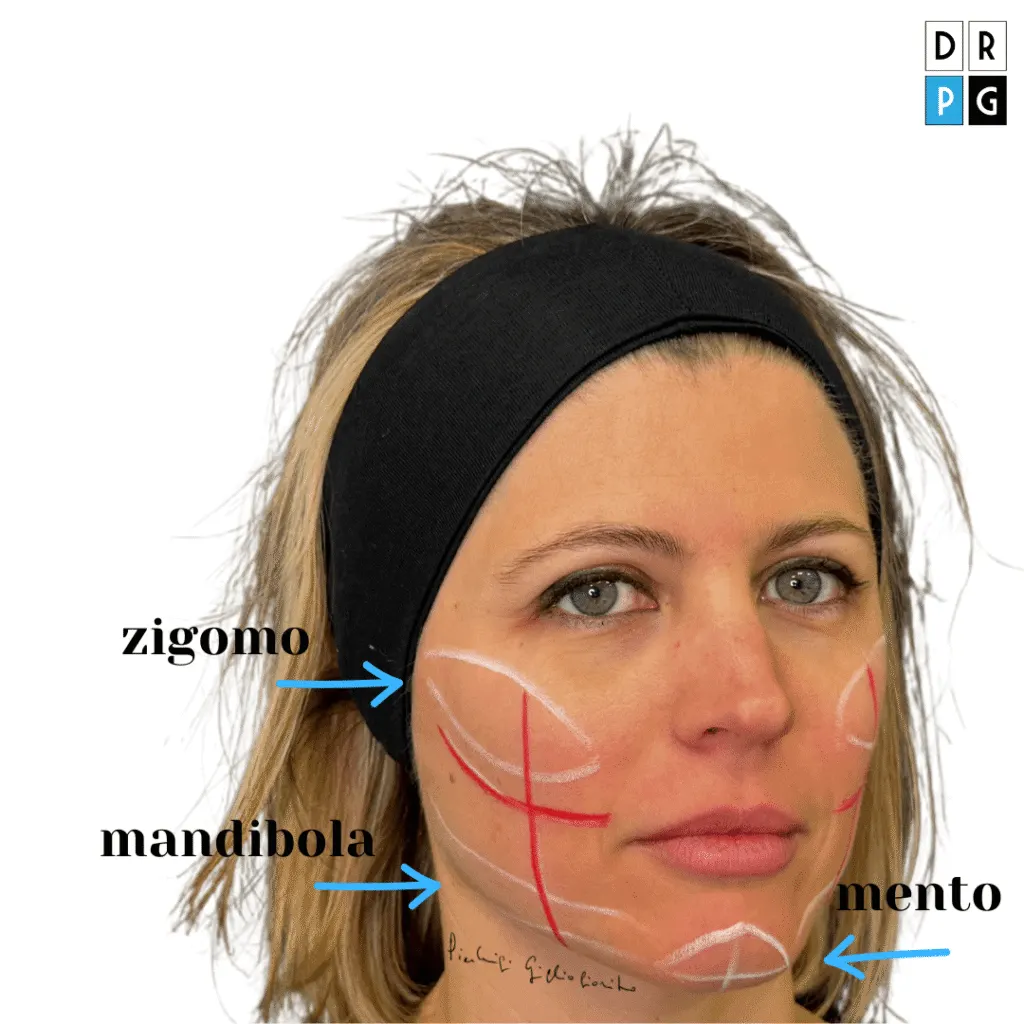
Perfect knowledge of facial anatomy and injection techniques are two key elements.
The harmonious enhancement of facial contours stems from these three aesthetic subunits, responsible for the facial appearance, whether viewed from the front, three-quarters, or in profile. This means that a comprehensive improvement of the entire face can be achieved by treating just these three areas, which form the frame of the face.
So considering the “face frame” element , we can work in two completely distinct modes.
In fact, in the case of a very thin subject, we can make the face fuller by widening this frame, while in the case of a patient with a plumper face we can narrow the frame, giving three-dimensionality to the face.
For this reason, with the same product, we can achieve two completely different results. Using the same technique and the same design for every patient would be a source of failure. What I always tell doctors who come to my training courses is that every patient represents a new challenge. Every patient is different. And every patient will have different needs. We should never standardize things. Aesthetic Medicine is an art, highly specialized, but an art.
Shape anomalies:
Symmetry doesn't exist. None of us have a perfectly symmetrical face, just as many people may have imperfect dental occlusion . This doesn't mean that face contouring can eliminate an asymmetry or, for example, correct a malocclusion. This isn't the goal of the treatment. It should be noted, however, that fillers can minimize a difference in volume or give greater projection to a slightly receding chin.
Many of the requests I receive from patients are related to developmental anomalies of the skeletal system. And where aesthetic medicine can't reach, surgery steps in. Plastic surgeons, dentists, and maxillofacial surgeons work closely together precisely because a single problem often has multiple solutions.
I'll now show you an example, the case of dental classes and how these can then have an effect on facial aesthetics.
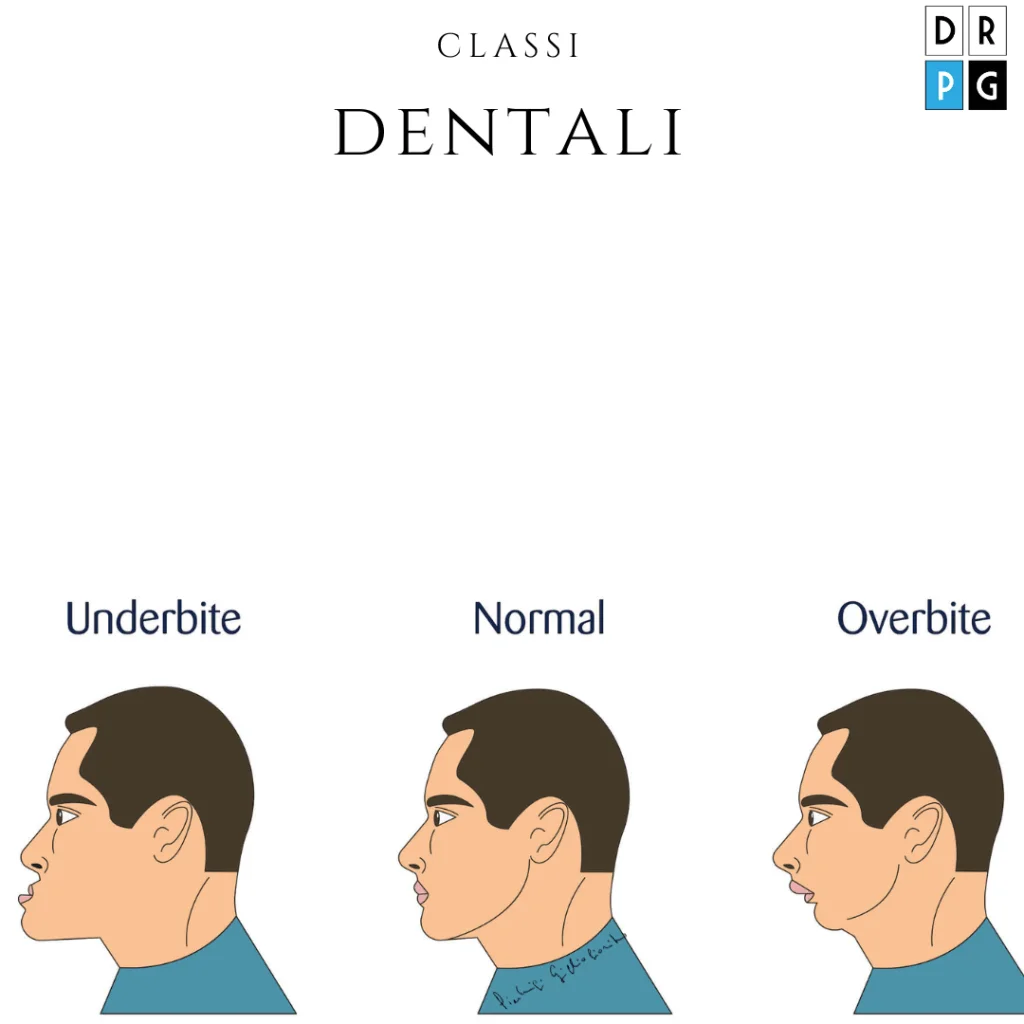
Hypoplasia of a bone, such as the zygomatic bone or the mandible, will certainly also affect the overlying skin, leading to reduced projection. These and many other aspects can be addressed with the right product and the right technique.
For example, in the case of an underprojected chin, that is, one that is set back from the jaw (image top right), it is possible to add volume and restore the correct forward projection of the chin.
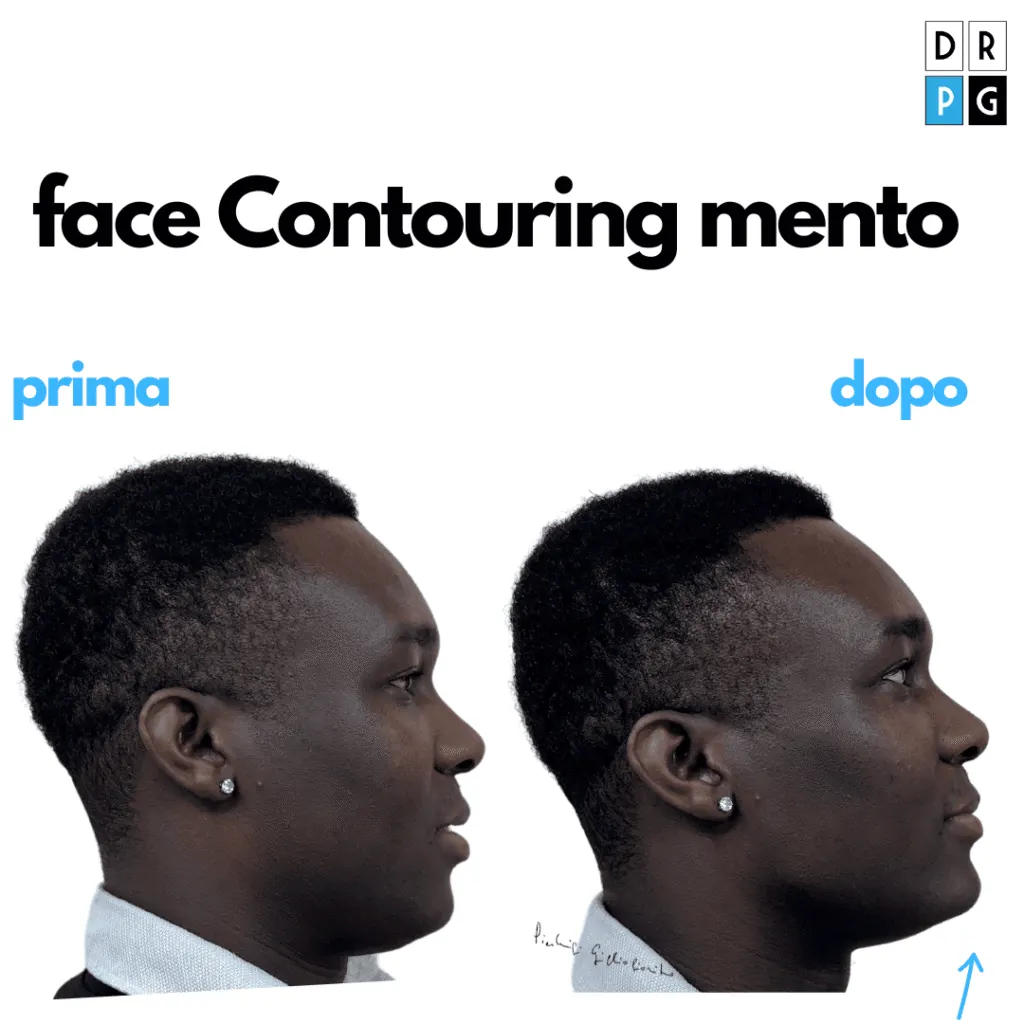
What are the main indications of Full Face?
There are numerous indications for FaceContouring, mainly aimed at the zygomatic, mandibular and chin regions.
The goal of the treatment is to define facial lines. Face contouring draws on the concepts of makeup , which defines convex areas (lighter makeup) and concave areas (darker makeup), thus accentuating facial lines.
Similarly, fillers can be used to give greater definition to the cheekbones, chin and mandibular angle (Full Face).
This treatment, thanks to the different use of filler, allows you to make a full face more defined in the entire posterior direction or to make the face of a thinner patient fuller.
- Cheekbones: the cheekbone can be divided into an anterior and a posterior zone. If we give more volume to the front area (the cheeks) we will get a rounder face. If, on the contrary, we give volume to the middle back (zygomatic arch), we will get a more elongated face.
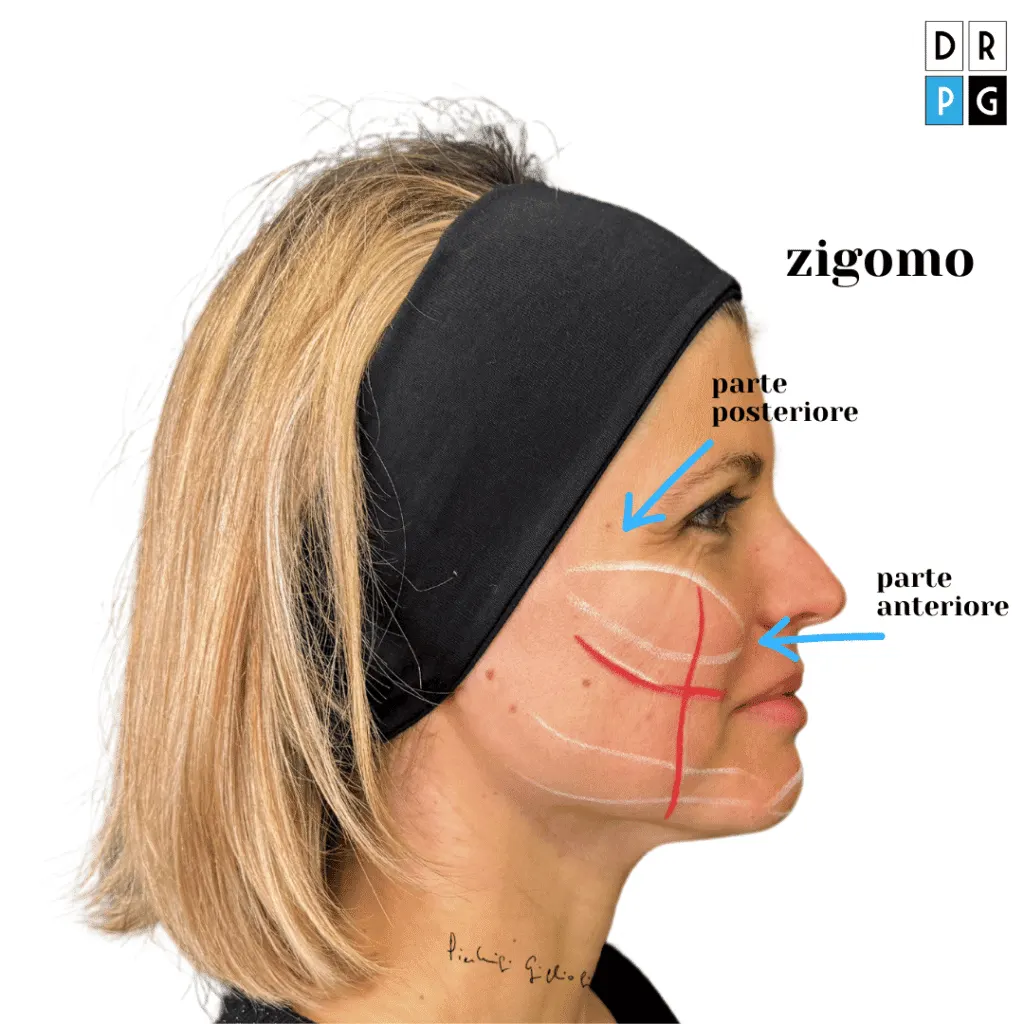
This means that the same technique will not be used in every patient and that the drawings preceding the treatment are fundamental.
What products are used for facial harmonization?
Facial harmonization can be done with different products.
The most commonly used are fillers made of completely absorbable materials.
I tend to use, depending on the case, hyaluronic acid or calcium hydroxyapatite.
These are completely absorbable products that last from 6 months to a year.
They have different properties and the choice of one or the other depends on the need to give more volume or more dynamism to the face.
In fact, fillers can be distinguished on the basis of their rheological properties , that is, the chemical-physical characteristics of the products. The two main characteristics, cohesiveness and elasticity , will lead to purely volumizing products or products that instead regulate the dynamic lines of the face.
A very cohesive (hard) and inelastic filler's primary effect is to add volume. A highly elastic product, on the other hand, tends to respond better to external stresses and therefore adapts better to facial movements. Very often, both products are used to achieve both volume and shape.
There are many quality companies on the market, and they all offer products with these two qualities. I always recommend consulting your doctor to choose the most suitable filler for your patient's needs.
Alternatively, the patient's own adipose tissue can be used , which has an excellent volumizing effect. This procedure is called lipofilling but is used less frequently because it involves actual surgery and is therefore slightly more invasive.
What changes with the dynamic Full Face?
The concept of facial harmonization , much publicized on various social and information channels, has undergone a profound revision in the last year.
The Dynamic Full Face as well as the Dynamic Face Contouring represent a new way of approaching facial volumization.
The fundamental difference lies in the way the treatment is planned.
Our face is in fact an extremely dynamic structure , in continuous movement , and this concept becomes the starting point in the pre-operative drawings.
Let's consider the face from a new point of view:
a three-dimensional structure in continuous movement!
The drawings and all the treatment will therefore be based on this aspect.
In fact, compared to traditional techniques, in this case both the drawings and all the pre-treatment planning are performed in motion, that is, by asking the patient to contract their facial muscles.
This way, it will be possible to offer personalized treatments based on the needs and anatomical variability of the individual patient.
This is why we speak of “tailor made” treatments, which in Italian can be translated as “made to measure”.
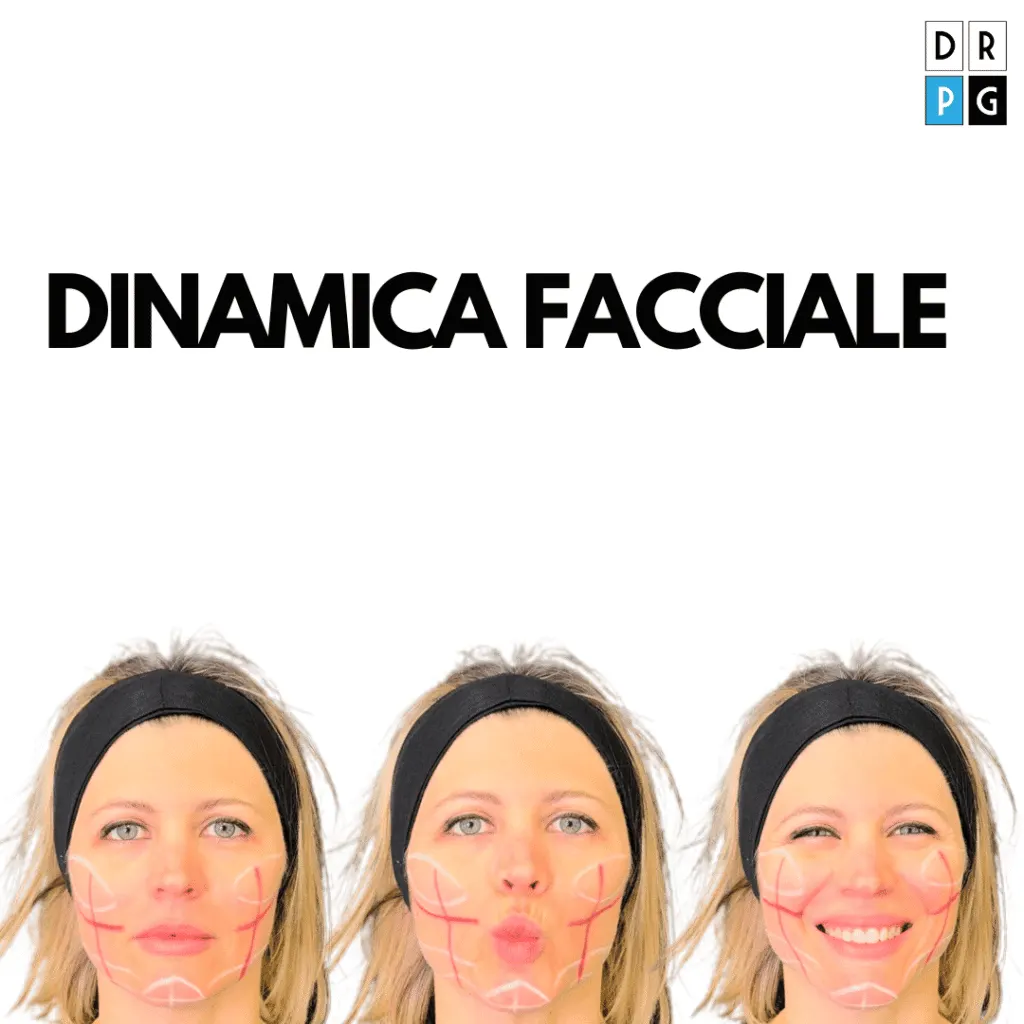
3D:
Considering three-dimensionality, we can use products with different levels of "cohesiveness" (hardness) and "elasticity" (ability to follow movement). A harder product is implanted deeper into the skin to add volume , while a more elastic product is applied to the surface to follow the movements of the face.
Movement:
This aspect is the basis of pre-treatment drawing. We typically follow the lines traced on the face during the main expressive movements. The face changes during movement. The skin and volumes, particularly of the cheeks and cheekbones, change completely when we look at a face at rest or, for example, when the person smiles.
These two concepts, the three-dimensionality of the face and movement , govern the entire procedure and make it highly innovative. The result is a more harmonious face, both in the static and dynamic phases, i.e., during movement.
I personally firmly believe that the future of aesthetic medicine is headed in this direction. Having a beautiful face only in photos but completely unnatural on video is, for me, a sign of failure. In fact, I've completely overhauled many of my procedures, making them dynamic. You've probably heard of the dynamic lip filler, which I've been performing for over six months now. I'll discuss this topic in a separate article.
Notes on Anatomy
Before going into the treatment details, I would like to briefly show you the anatomy that will determine the appearance of our profile.
The main areas of interest are given by bone and adipose structures.
Bone structures:
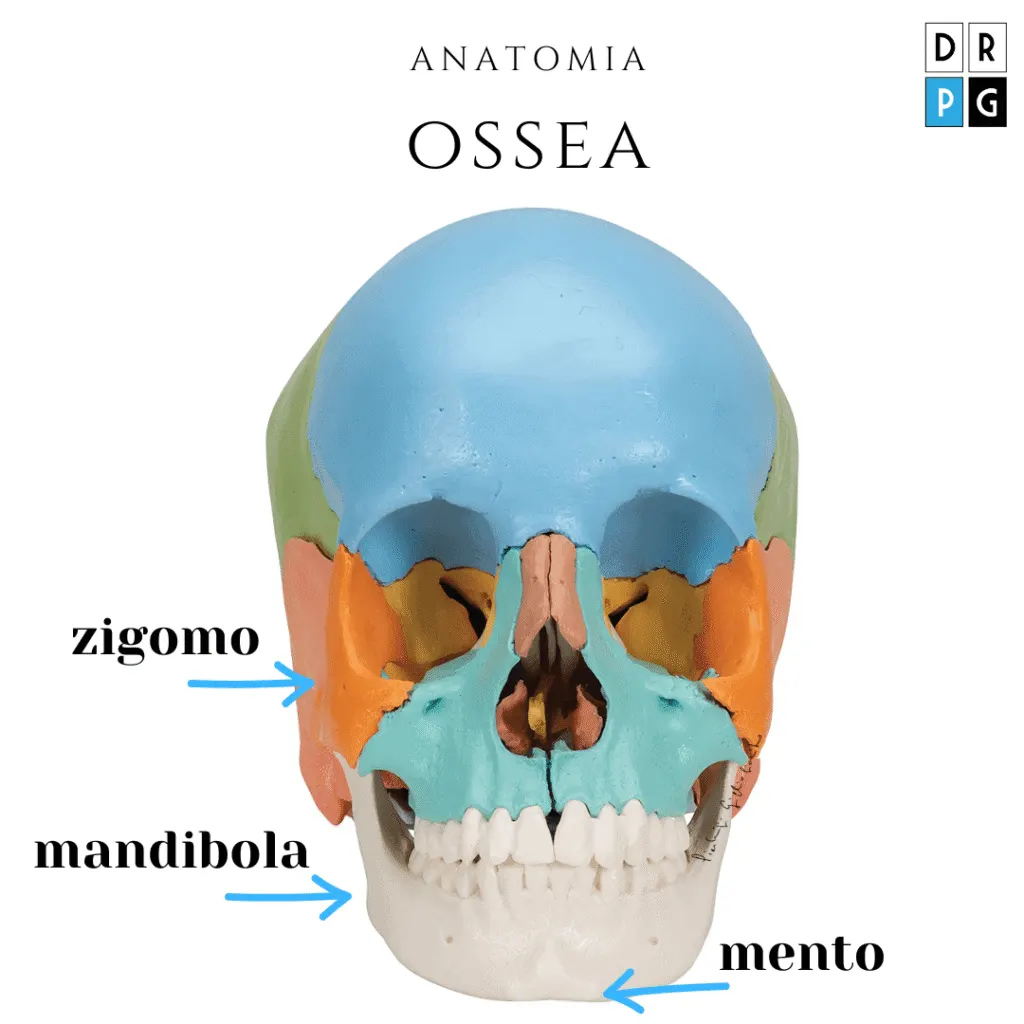
FaceContouring and Full Face involve the volumizing of specific areas of the face.
In particular, three areas in particular must be addressed: cheekbone, chin and jaw.
These three areas can also be treated separately depending on the result you want to achieve.
Adipose structures:
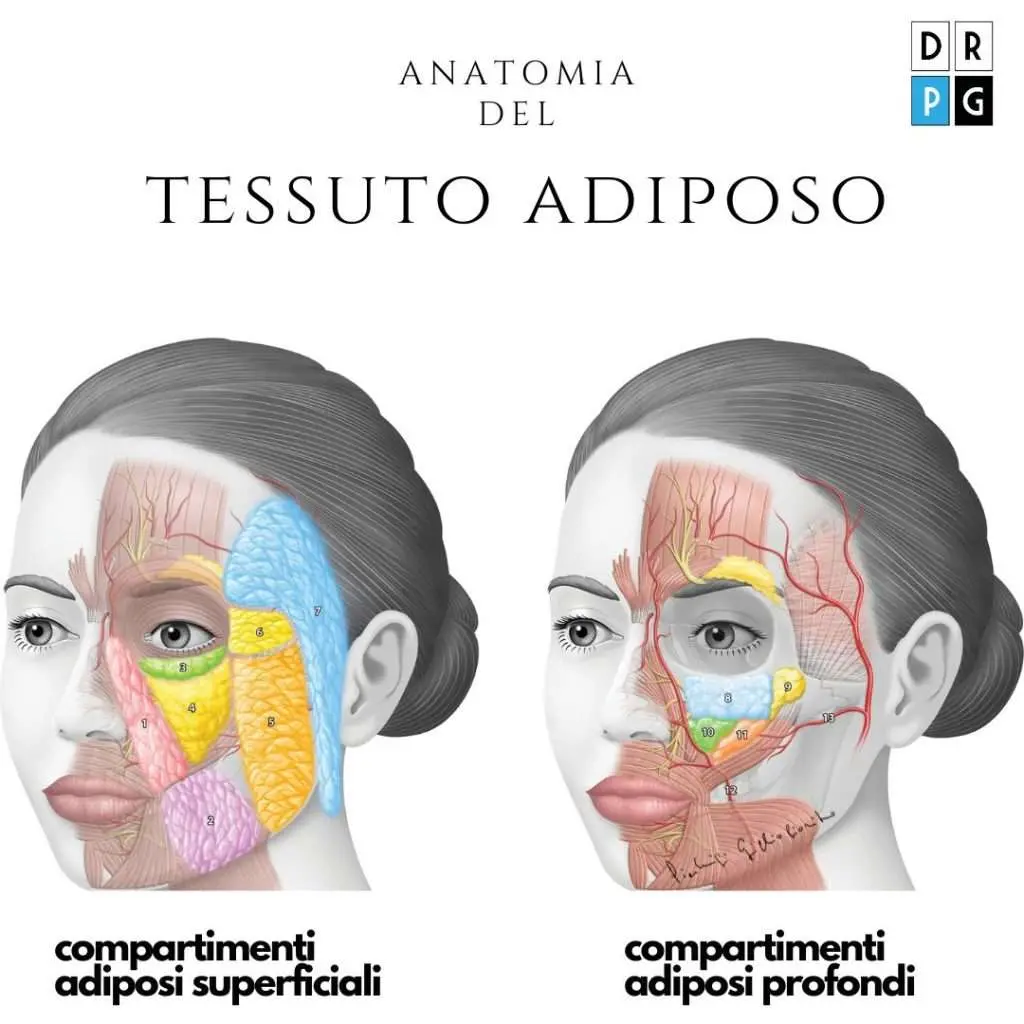
Facial adipose anatomy plays a crucial role in treatment planning. To simplify matters, I'm including an image from a recent article published in the leading plastic surgery journal, which distinguishes two adipose compartments: superficial and deep.
Perfect knowledge of these anatomical areas allows for excellent and extremely natural results.
This crucially important article confirms what I've been saying for some time. Specifically, the study confirms the importance of dynamic filler techniques and how, by following facial movements, it's possible to dose the product to achieve beautiful results not only in photos but also in videos, that is, during facial expressions.
conclusions:
I hope I've clarified, as much as possible, the concept of Face Contouring and its evolution into dynamic fillers, and I hope you agree on the need to place naturalness and harmony of results as the ultimate goal of aesthetic medicine.
FAQ: Frequently asked questions about full face surgery
Il Face Contouring focuses on a single area of the face (e.g. the cheekbones), while the Full Face It simultaneously treats the three key areas: cheekbones, chin and jaw, for complete facial harmonization, when necessary.
Absolutely. Each treatment is tailor-made , based on the patient's morphology and needs. The goal is to enhance the face without sacrificing naturalness.
Absorbable fillers such as hyaluronic acid or calcium hydroxyapatite are used . The choice depends on the area being treated and the desired result (volume vs. elasticity, duration of effects).
The duration varies depending on the type of filler used, but generally the results last for 6 to 12 months.
The treatment is well tolerated. To reduce discomfort and better dose the product, a small, blunt cannula is used, and products containing lidocaine are used to minimize discomfort.
Yes, it's an outpatient treatment. You may experience some minor swelling or bruising, but there's no hospital stay or significant recovery time.
The cost varies depending on the areas treated and the amount of product used. It typically ranges from around €900 to €1200 for a complete treatment on three areas.
It is a facial harmonization treatment that uses fillers on the cheekbones, jaw, and chin to improve the proportions and profile of the face as a whole.
Dynamic Full Face represents an advanced form of facial harmonization, because it also takes into account facial movements, not just volumes.
The cost of Full Face Dynamic Filler in Milan varies based on the areas treated and the amount of product used, but generally ranges from €900 to €1200 for a complete treatment on three areas.
🧏♀️ What our patients say about the Dynamic Full Face:
📸 “I finally recognize myself on video too!”
“I always hated seeing myself in videos because it looked like my face was changing shape. After the dynamic treatment, my face maintained its harmony even in motion. I had a small bruise that went away after four days.”
Anna, 35 years old, Naples
🪞 “No one realized I had fillers.”
“The great thing about this treatment is that no one noticed. Everyone tells me I look rested. It wasn't a drastic change, but a gradual improvement. They ask me if I changed my hairstyle or if I slept more... and I smile.”
Liliana, 33 years old, Gorgonzola
Dr. Pierluigi Gigliofiorito: Experience and training in full-face surgery
Dr. Pierluigi Gigliofiorito, Plastic and Reconstructive Surgeon, specializes in aesthetic medicine and surgery, focusing on harmony and personalized results. Full-face procedures allow for facial harmonization without the need for surgery.
Immediate and visible results.
Book a full-face consultation with Dr. Pierluigi Gigliofiorito.
Find out if you're the ideal candidate for your next full face. Book a consultation with Dr. Pierluigi Gigliofiorito :
👉 [Contact me on WhatsApp at 345/2138775 or write to me via email: info@gigliofiorito.com]
The information on this site is for informational purposes only and does not replace a doctor's opinion during a visit. Each treatment is individually assessed based on each individual case. Results may vary from patient to patient. No content is intended to be promotional or to encourage the performance of medical procedures.