Male rhinoplasty: humped nose and breathing difficulties, analysis of a real case
By Dr. Pierluigi Gigliofiorito – Specialist in Plastic, Reconstructive and Aesthetic Surgery
«I'd like to get rid of the hump and have a straighter nose, but I don't want a fake nose.»
This, in short, was the request of a young patient who turned to me for rhinoplasty.
The problem, however, wasn't just aesthetic. Besides being dissatisfied with the shape of his nose, the boy also reported difficulty breathing.
This case is interesting because it allows us to answer a frequently asked question: in a rhinoplasty, is it enough to correct the hump or should the nose be considered as a whole?
The answer is that any changes to the back must be evaluated in relation to the tip, facial proportions and respiratory function.
The complexity of the procedure and the structures to be treated can also affect the estimate: I've explored this aspect in more detail in the article dedicated to various details, including how much a rhinoplasty costs.
Let's analyze this nose together before the surgery
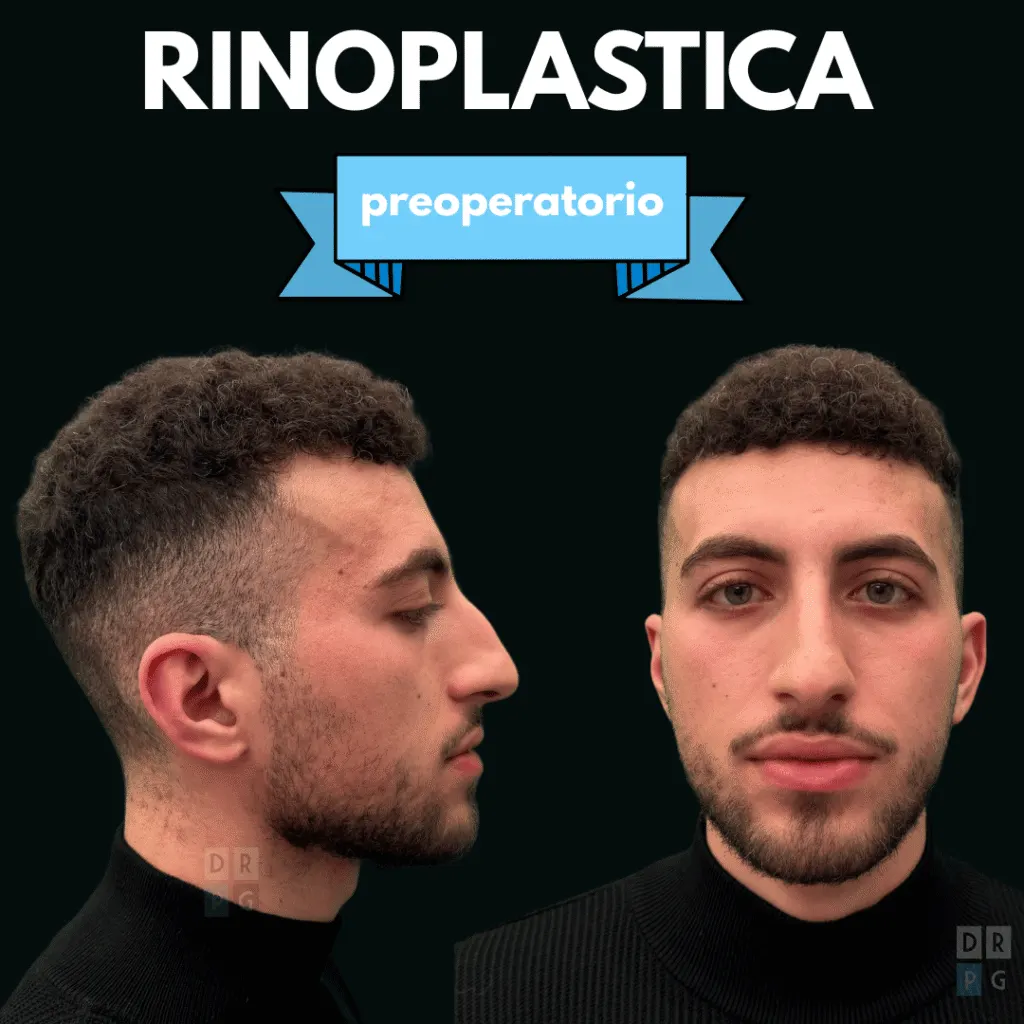
The profile view highlights the irregularity of the dorsum, which the patient perceived as a "hump." However, the assessment didn't stop at the dorsum: we also considered the shape and position of the tip, the proportions of the nose relative to the face, and the patient's reported breathing problem.
Preoperative photography is the starting point of planning.
The patient was especially sensitive to the hump on his back and wanted a more linear profile. At the same time, he requested a slightly more upwardly angled tip, while maintaining a masculine and natural look.
His request was therefore not to obtain a completely different nose, but to correct some elements while maintaining the identity of the face.
The aesthetic evaluation was then associated with the functional problem: the patient reported having difficulty breathing.
And this is where a rhinoplasty cannot be planned simply by looking at the hump.
What should I consider before rhinoplasty?
During the examination, I consider the nose as a whole: the bridge, the tip, its projection and rotation, the symmetry and the relationship of the nose with the forehead, lips, and chin.
When the patient also reports breathing difficulties, the aesthetic evaluation must be combined with an evaluation of the structures that may influence the passage of air.
Photography therefore allows us to analyse the external form, but respiratory function requires a specific clinical evaluation.
Why not just remove the hump?
Removing the hump does not automatically mean obtaining a harmonious nose.
The back and tip are two elements of the same balance. Altering the profile without considering the position of the tip can produce a result that is disproportionate to the rest of the face.
In the case of this patient the goal was to obtain:
- un straighter and more regular back;
- a better defined and slightly more rotated tip;
- a result consistent with a male face;
- a natural nose, avoiding an excessively “operated” look;
- at the same time, evaluate the respiratory problem reported by the patient.
This is an important concept: rhinoplasty should not correct a single detail in isolation, but seek a balance between the different components of the nose and the face.
Rhinoplasty and breathing difficulties: can they be addressed together?
Some patients who require cosmetic rhinoplasty also experience breathing difficulties.
The two issues must be analyzed separately but can, when indicated, be addressed within the same intervention.
Nasal breathing difficulty can, in fact, be associated with various anatomical conditions. Therefore, simply experiencing "difficulty breathing" alone does not allow us to determine the cause.
The visit serves to understand which structures are involved and to plan the intervention by trying to combine form and function.
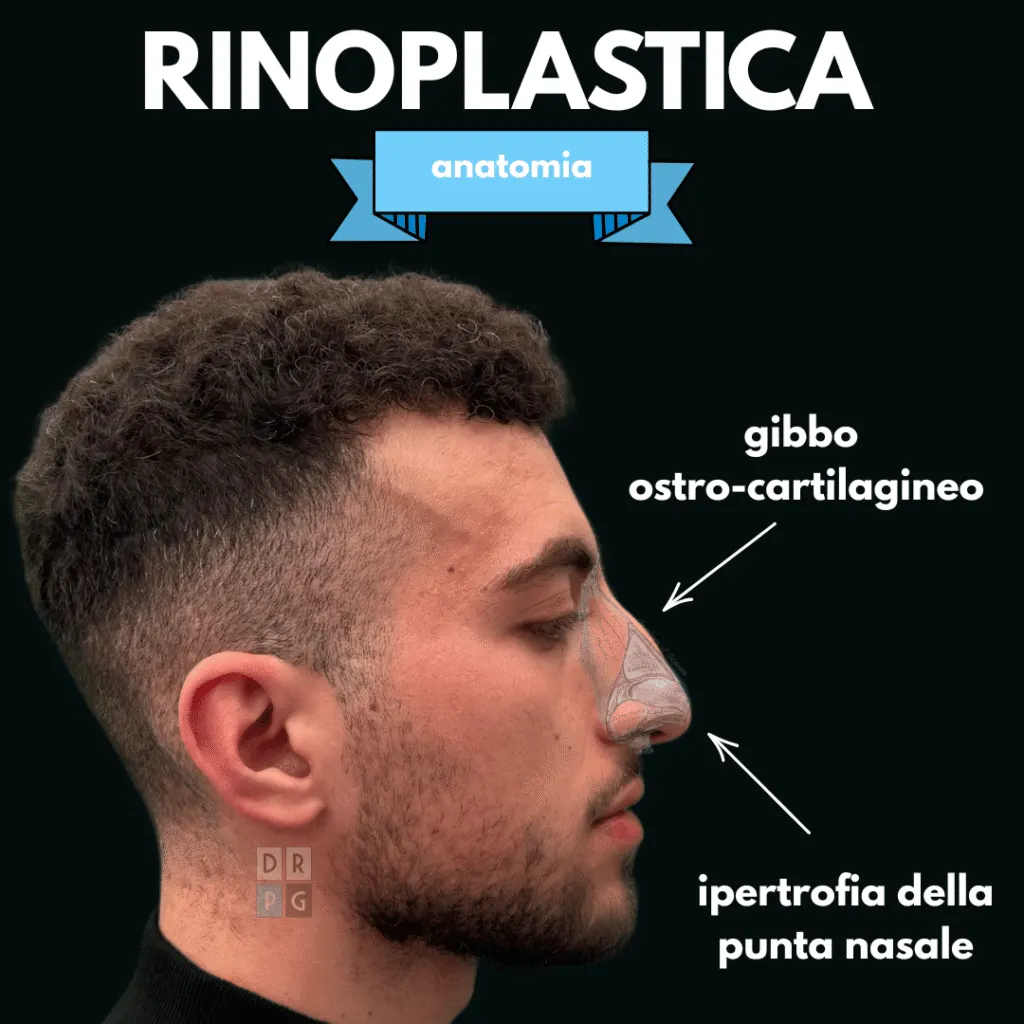
Profile analysis allows us to understand why, in this case, simply "removing the hump" would not have been sufficient. The osteocartilaginous hump had to be evaluated along with the morphology of the toe: modifying the back without considering the toe could have altered the overall balance of the profile.
How we planned the rhinoplasty
In this case, the surgical project started from a simple principle: not to transform the patient's face, but to correct the elements that disrupted the harmony of the profile while maintaining a natural result.
The planning therefore considered the back, the tip and the functional component simultaneously.
This step is particularly important because two patients who both apparently have a “hump” may require different interventions.
The technique should be chosen based on the anatomy, not the other way around.
Ultrasonic rhinoplasty: when can it be useful?
The so-called ultrasonic rhinoplasty uses piezoelectric instruments in some phases of the treatment of the bony structures of the nose.
However, it does not represent a type of nose nor does it guarantee, in itself, a more natural result.
The outcome depends primarily on the diagnosis, planning and anatomical changes that need to be made in the individual patient.
This is why I prefer to talk about the technology used only after explaining the problem we need to fix.
The result after the surgery
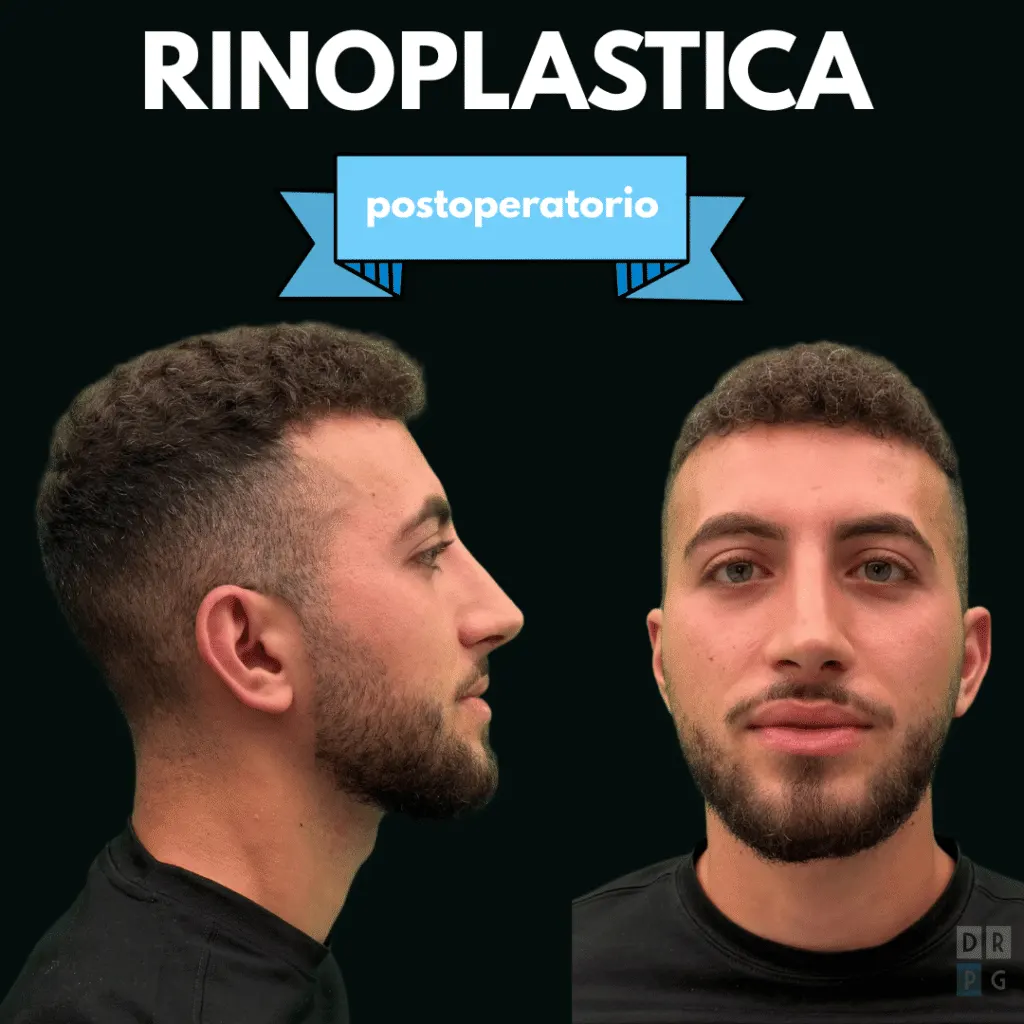
Postoperatively, the most obvious change concerns the profile: the dorsum appears more linear and continuous, while the tip has been reshaped, maintaining a natural look consistent with the male face. The comparison should therefore not be limited to the disappearance of the hump, but should also consider the balance achieved between the dorsum, tip, and facial proportions.
The photograph was taken 3 months after surgery. At this follow-up, the result may still show some residual edema, particularly at the tip.
After the surgery, the profile appears more linear and the hump that characterized the back has been corrected.
The tip has been modified to achieve greater harmony with the new profile, without creating excessive rotation or an artificial appearance.
It is important to always specify how far from the intervention the result is photographed.
The nose, and especially the tip, can continue to change during the healing process. A photograph taken after a few months doesn't necessarily represent the final result.
Swelling and settling times vary during the months following surgery: in the guide on [recovery after rhinoplasty] I explain what to expect during the different phases of the post-op period.
Male rhinoplasty before and after: what's changed?
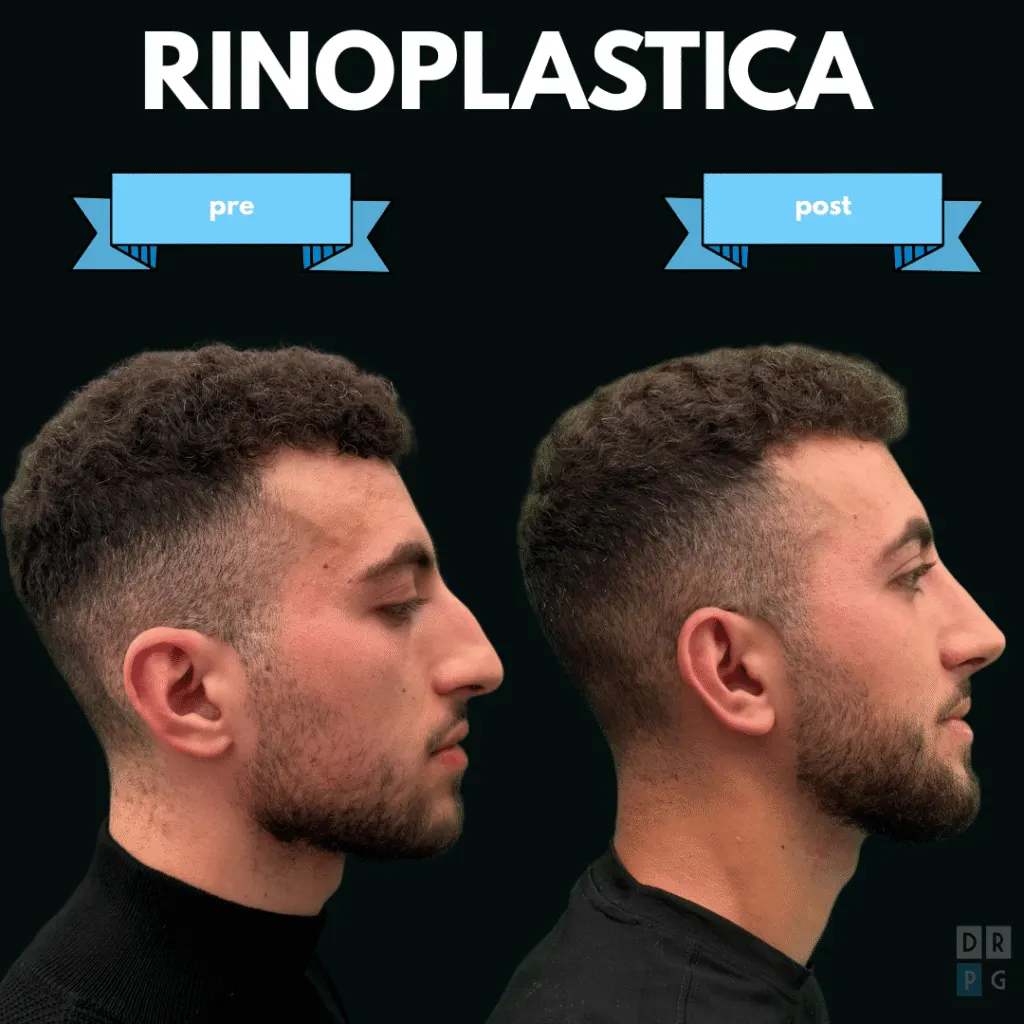
A profile comparison shows that the correction didn't just affect the hump. The bridge has a more regular line, while reshaping the tip helps rebalance the profile while maintaining the masculine features of the face. The goal wasn't to create a completely different nose, but to achieve a natural result consistent with the patient's proportions.
The before and after comparison should not be limited to asking whether the nose has become “more beautiful”.
In this case I would evaluate four elements in particular:
Back
The prominence that interrupted the profile has been corrected, obtaining a more regular line.
Punta
The position and shape of the tip have been harmonized with the new back without seeking excessive rotation.
Proportions
The new profile must be read in relation to the entire face and not as an isolated structure.
Naturalness
The goal agreed with the patient was for the nose to be modified without becoming the protagonist of the face or appearing artificial.
How to avoid a "fake" nose after rhinoplasty?
There is no single technique that guarantees a natural result.
For me the fundamental point is not to apply the same nose model to all patients.
A male nose does not necessarily have to be perfectly straight, just as a tip does not necessarily have to be very curved.
The result must be designed considering the patient's starting anatomy, facial features and realistic goals.
In the case we are analyzing, the request for a “straight but not fake nose” guided the planning.
What does this case teach us?
This case shows above all that a hump on the nose should not be evaluated in isolation.
The patient may come to the surgeon pointing out a single thing they don't like. The purpose of the visit is instead to understand:
what the patient sees, what the anatomy actually shows, what other structures need to be considered, and what modifications can achieve a proportionate result without compromising function.
When respiratory difficulty is also present, the evaluation becomes even more important because aesthetics and function must be included in the same surgical planning.
FAQ
It depends on the anatomy. In some cases, dorsum correction must be combined with modifications to the tip or other structures to maintain harmonious proportions.
The goal of a well-planned rhinoplasty is to achieve a result consistent with the patient's facial features. However, there is no single "natural nose" model: planning must be individualized.
When a functional problem is identified during the evaluation, it may be possible to combine aesthetic correction with treatment of the structures responsible for the respiratory obstruction.
Yes, when indicated. However, the degree of rotation must be determined based on the anatomy and proportions of the face, avoiding applying the same result to all patients.
The change is visible in the early stages, but swelling and tissue settling can continue for several months. The tip is often one of the areas that takes the longest to develop.
Male rhinoplasty: the visit helps plan the outcome
A rhinoplasty should not start from the choice of an “ideal nose”, but from the analysis of the patient's real nose and real face.
In the case described, the initial request was apparently simple: eliminate the hump, make the nose straighter and slightly modify the tip.
The simultaneous presence of respiratory difficulty made it necessary to also consider the functional component.
It is precisely this overall assessment that allows us to build a personalized surgical plan.
If you are considering the procedure, you can learn more about the indications, technique, and surgical procedure on the page dedicated to [rhinoplasty].
The information in this article is for educational purposes only and is not a substitute for medical advice. Indications, surgical technique, recovery times, and results vary depending on the individual patient's characteristics.