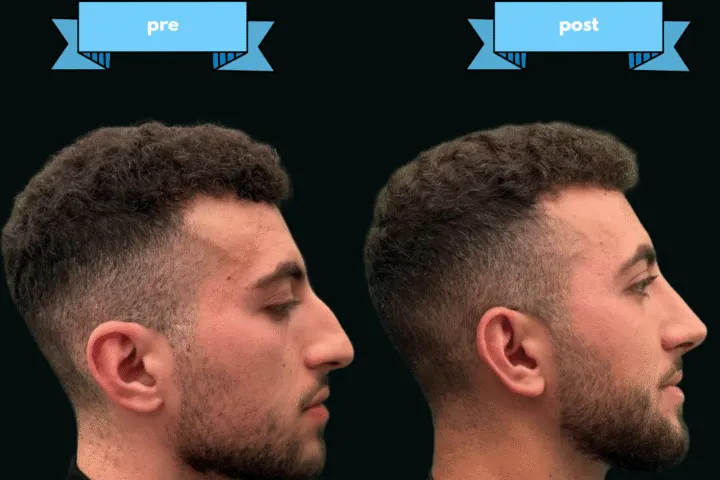
Tuberous breasts: why isn't a simple implant enough? Analysis of a real case.
Reading time: ~6 minutes
Many women with tuberous breasts aren't aware that they have a true breast development disorder. They simply think their breasts are small, spaced apart, asymmetrical, or poorly shaped.
This is what happened to the patient in this clinical case: a 25-year-old woman , aware of not feeling comfortable with her breasts, but without knowing that behind that shape there was a specific anatomical condition.
Her discomfort was not only aesthetic: it caused her embarrassment at the beach and in her intimate life.
In this article, I want to show why, in tuberous breasts, simply increasing the volume with an implant may not be enough and why correction must start with an analysis of the shape.
Actual clinical case: Pre- and post-operative photographs are published for informational purposes only. The results shown are individual and cannot be considered representative of those achievable in every patient.
By Dr. Pierluigi Gigliofiorito – Plastic Surgeon in Milan and Caserta
Dr. Pierluigi Gigliofiorito specializes in Plastic, Reconstructive, and Aesthetic Surgery. He specializes in breast surgery, breast augmentation, mastopexy, and combined techniques with lipofilling. He practices in Milan, Caserta, and Rome.
What are tuberous breasts and why can they go unnoticed?
Tuberous breast , or tuberous breast, is a congenital alteration of breast development that becomes evident during puberty.
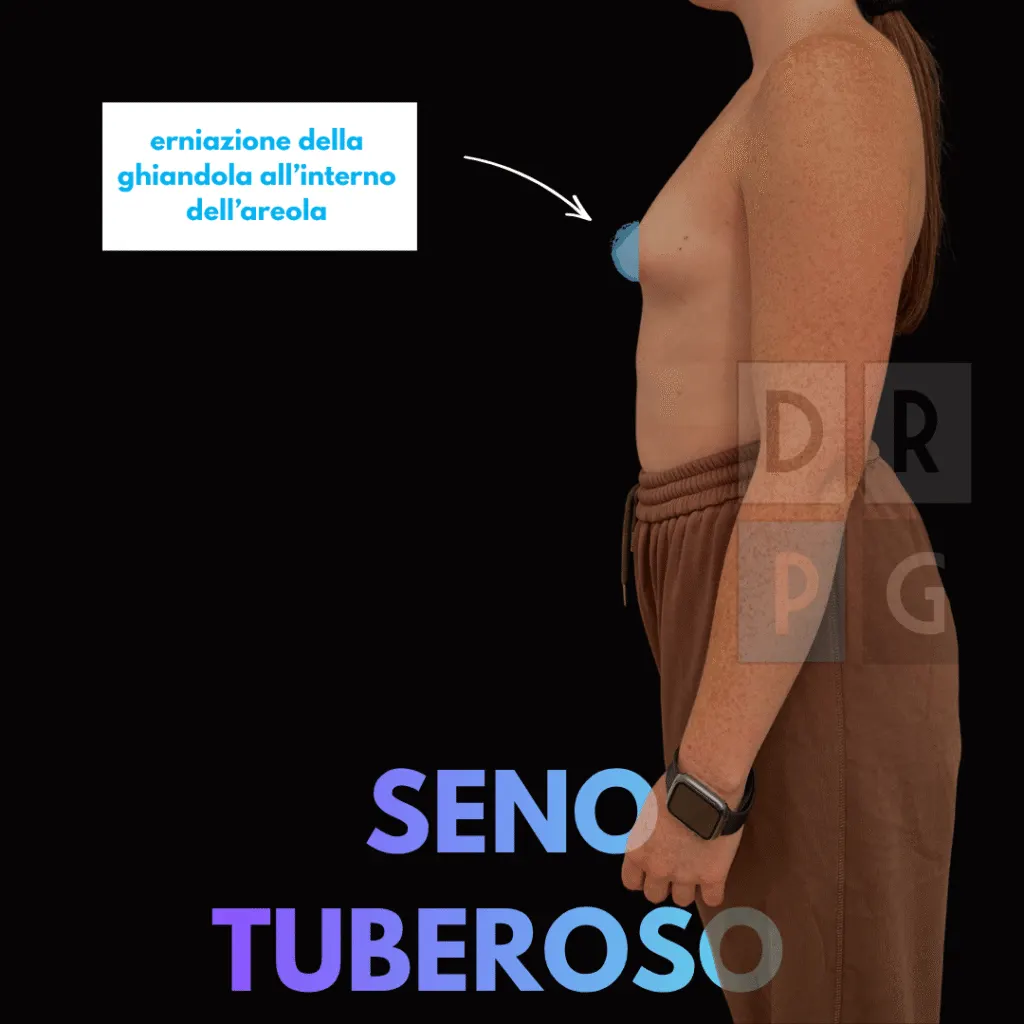
However, there is no single form of tuberous breast. The following may be present, in different combinations and degrees:
- narrow breast base;
- poor development of the lower quadrants, especially in the medial portion;
- high or poorly defined submammary fold;
- breast hypoplasia;
- dilated areola;
- protrusion of the gland through the areola;
- asymmetry between the two breasts.
The classifications used in literature distinguish different forms depending on the quadrants involved and the severity of the constriction.
This explains why some women immediately recognize a particular breast shape, while others simply think:
“I have ugly breasts.”
And that's exactly what happened to the patient I'm presenting. I'll leave you with the link to my decision-making algorithm when planning breast augmentation.
The case study: It wasn't just small breasts
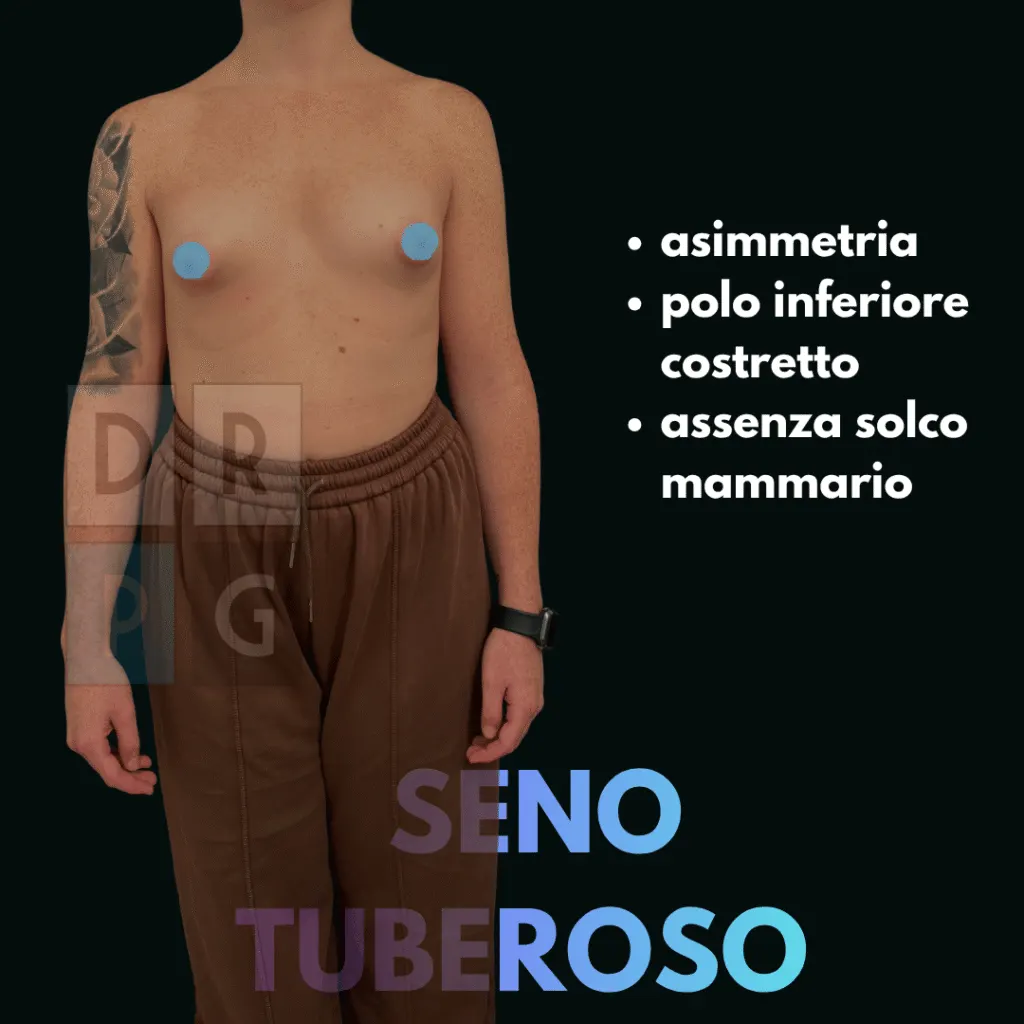
The patient was 25 years old and came to the appointment because she was dissatisfied with the shape of her breasts.
She wasn't familiar with tuberous breasts and didn't know she had a breast malformation. However, the problem had a tangible impact on her daily life: she felt embarrassed about exposing her breasts to the sea and in her intimate life.
During the visit, the key point was to make her understand that we were not simply evaluating how much to increase the volume.
We had to correct a form.
In her case, the conformation of the breast base, the deficit of the lower and medial quadrants, the poor definition of the inframammary fold and the areolar morphology were particularly important.
The first point of my reasoning
If I had treated this breast as a simple breast hypoplasia, inserting only an implant, I would have increased the volume without addressing all the components of the initial deformity.
And this is one of the fundamental differences between a normal breast augmentation and the correction of a tuberous breast.
Why is a simple prosthesis not always enough for tuberous breasts?
A breast implant adds volume, but tuberous breasts may simultaneously present a constriction of the base, an abnormal distribution of the gland, alterations of the areola and of the inframammary fold.
This is why the question I ask myself during the design process is not only:
“Which prosthesis should I use?”
ma:
“What anatomical components should I correct to create a more harmonious breast shape?”
In fact, there is no universally indicated surgical technique for all tuberous breasts. A recent scientific article emphasized the need to choose different strategies based on the anatomical characteristics and preferences of each individual patient.
How I designed the intervention
In this case I chose a combined approach.
The goal was not simply to obtain larger breasts, but to intervene on the areola, gland, breast base, fold, volume and décolleté.
1. Periareolar mastopexy and areola reduction
I used a periareolar access which allowed me to reduce the diameter of the areola and at the same time work on the shape of the breast.
The scar is then positioned along the edge of the areola.
The periareolar approach and circumareolar mastopexy are techniques described in the correction of various forms of tuberous breast, but their indication depends on the characteristics of the individual case.
2. Remodeling of the gland
The next step was to work on the mammary gland , because the problem was not only the amount of tissue present, but the way in which it had developed and distributed.
The aim was to allow a more harmonious redistribution of the tissues and correct the constriction responsible for the shape.
Glandular reshaping or scoring techniques are widely described in tuberous breast surgery.
3. Reconstruction of the mammary fold
Another important element was the submammary fold , which was poorly represented in the initial conformation.
I then reconstructed the sulcus in the planned position to create a new base and help define the lower pole.
This is an important step because in tuberous breasts the problem can involve the very base of the breast and the position of the sulcus.
Why I chose a wide-based round denture
For this case I used a 350cc round Mentor TMPX prosthesis , positioned using the dual plane technique.
But the interesting fact is not the 350 cc.
The choice of prosthesis was made based on the anatomy I wanted to correct.
I needed a sufficiently wide base that would help widen the breast impression and, together with the tissue reshaping, achieve greater fullness in the medial component.
One of the agreed objectives was in fact to visually reduce the distance between the breasts and obtain a fuller décolleté , naturally respecting the patient's anatomical limits.
For this reason, I don't think it's correct to choose a prosthesis simply based on the desired size.
In tuberous breasts , the shape, base and characteristics of the implant can be as important as the volume.
Why I used the dual plane
The prosthesis was positioned in dual plane , therefore with a muscle coverage component associated with the remodeling of the relationships between muscle, gland and implant.
Dual plane is also one of the strategies used in the surgical correction of tuberous breasts; several clinical series describe the combination of glandular remodeling, periareolar access, and dual plane positioning.
The choice of plan, however, should not be automatic: it depends on the anatomy, the available tissues and the surgical plan.
Why I added lipofilling to the prosthesis
At the end of the procedure I added a further step: lipofilling with autologous fat taken from the abdomen.
Why use implants and fat at the same time?
The implant allows you to create volume and structure, while the fat can be used selectively to refine certain areas and improve the continuity of the breast contour.
In this specific case, I used it to further refine the shape and roundness of my breasts.
Lipofilling is now one of the techniques described for the correction of tuberous breasts, both as a single treatment and in combination with other procedures, as described in numerous scientific publications. I have personally performed hybrid mammoplasty for years, which I explore in detail in this article , which I invite you to read.
The one-year result: what has changed?
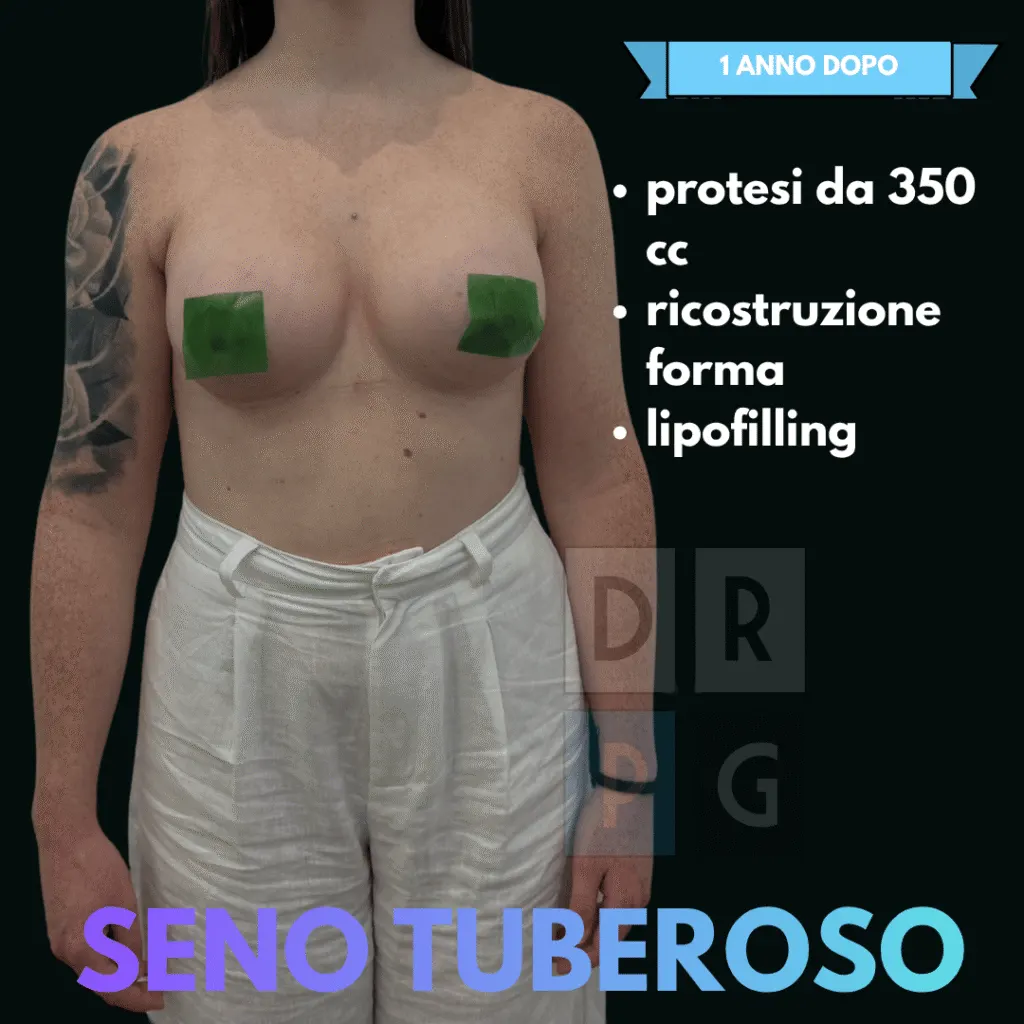
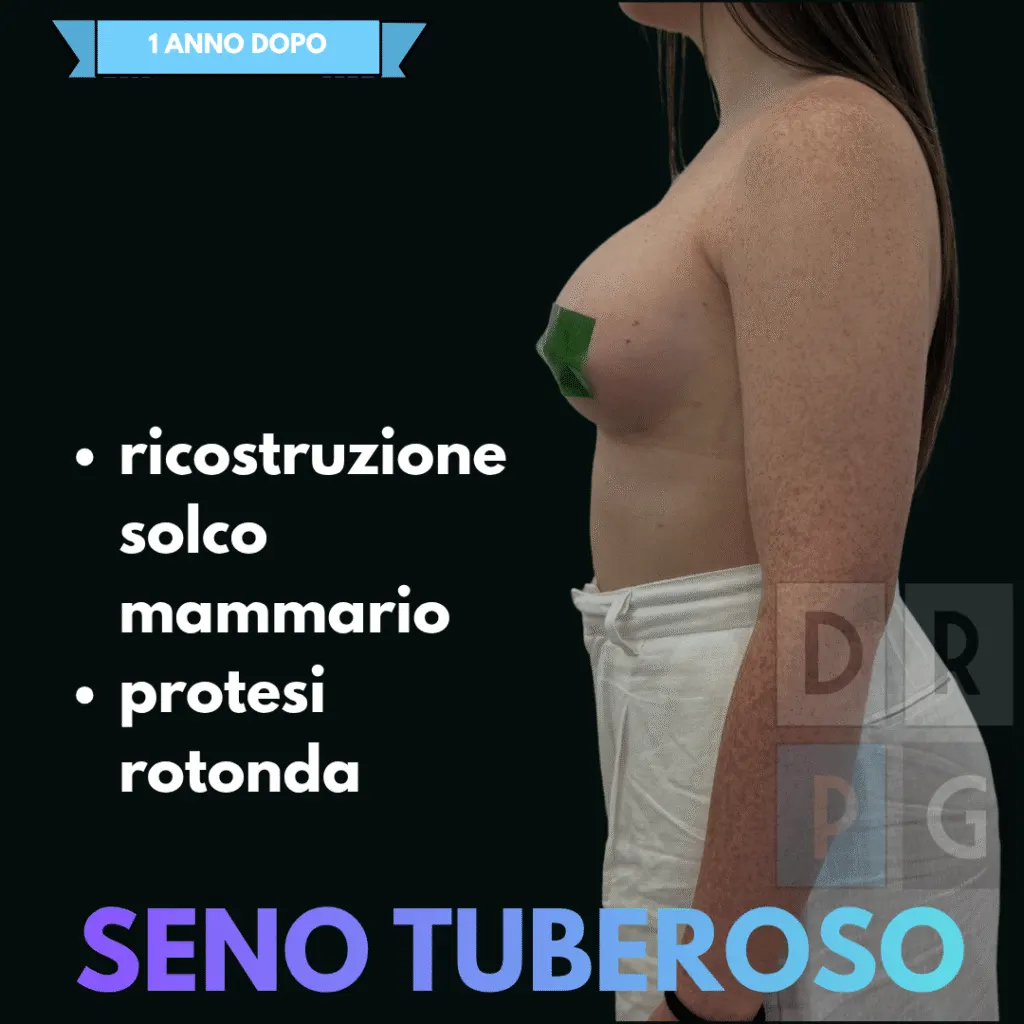
This photograph was taken one year after the surgery , so it allows us to evaluate the result after the initial adjustment phase.
When comparing before and after, goals should not be evaluated only in terms of size gain.
In the postoperative period the following are observed:
- a broader breast base;
- greater filling of the lower quadrants;
- greater fullness of the medial pole;
- a more represented décolleté;
- a new definition of the inframammary fold;
- modification of the areolar shape and diameter;
- an overall rounder and more proportionate breast shape.
The patient's postoperative course was uneventful, without complications.
This does not mean, of course, that the same course or outcome can be expected for every patient.
What does this case teach us?
In my opinion the most important point is precisely this:
For tuberous breasts, it's not enough to simply add volume. It's important to understand why the breasts have that shape and which structures need to be modified.
One patient may have a deficit mainly in the inferomedial quadrant; another a more extensive constriction; yet another a marked areolar protrusion or a strong asymmetry.
For this reason, two women both diagnosed with tuberous breasts may require different interventions.
The literature confirms this heterogeneity and, despite the numerous techniques described, it still does not identify a single optimal approach valid for all patients.
Tuberous breasts or simply small breasts: how to tell?
This is probably one of the most important questions.
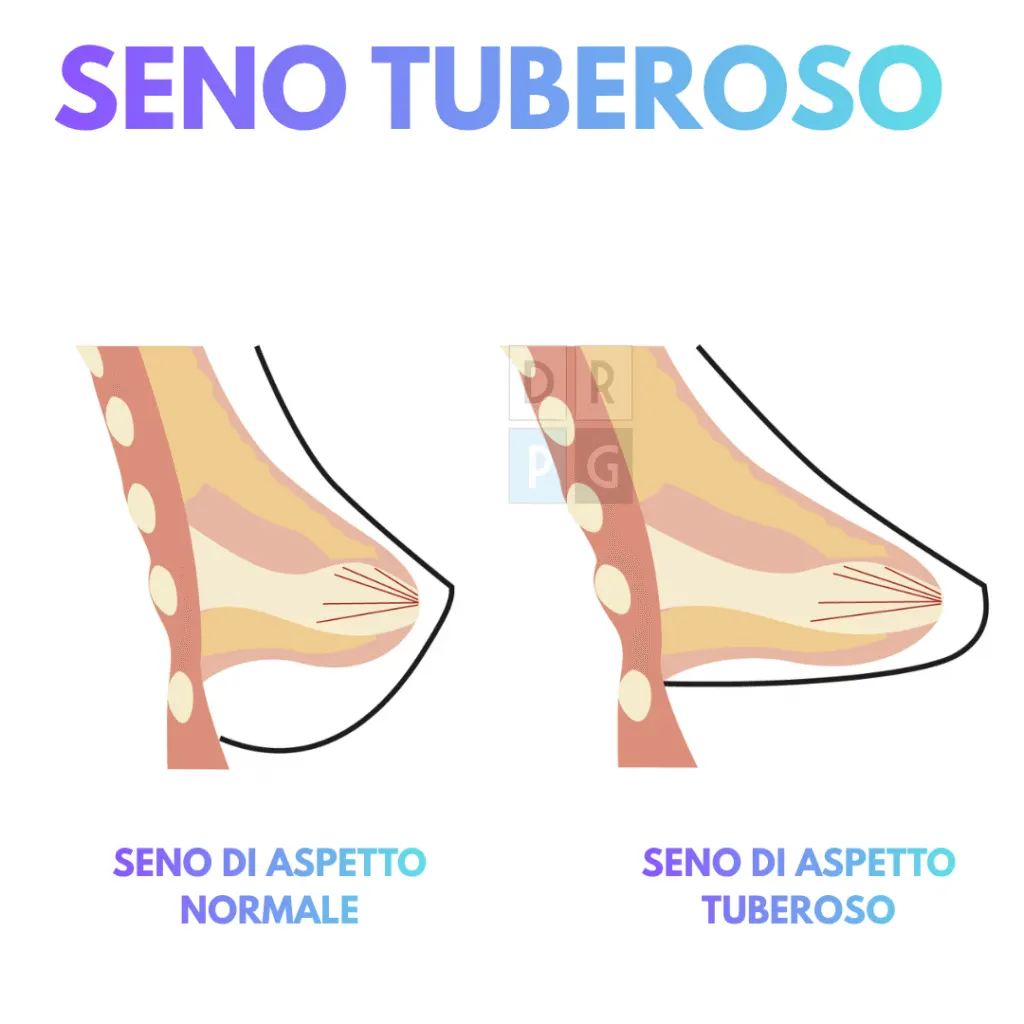
A small breast may have a normally developed shape and base , yet have little volume.
In the tuberous breast, however, some characteristic signs may be present:
- narrow breast base;
- poor development of the lower part of the breast;
- breast apparently “empty” towards the center;
- high or poorly defined breast fold;
- large or prominent areolas;
- elongated or constricted shape;
- asymmetry.
Not all of these elements need to be present at the same time. The less obvious shapes can be more difficult to recognize.
Correct diagnosis is important because it can completely change the planning of the mammoplasty.
FAQ: Questions patients ask me
Not necessarily. The distance between the breasts also depends on the shape of the chest and the breast base. However, if it is associated with narrowing of the base, lower quadrant deficits, alterations in the fold, or particularly prominent areolas, a specialist evaluation may be useful.
In some selected cases, this may be sufficient; in others, it may not. If glandular constriction, sulcus alteration, or areolar deformity are present, these components may also need to be addressed. The choice depends on the severity and anatomical characteristics.
No. A large areola alone is not diagnostic. Areolar dilation or protrusion may be present in tuberous breasts, but it must be evaluated in conjunction with other breast characteristics.
Yes, the inferomedial quadrant deficit is one of the configurations described in the tuberous breast classifications.
Because the sulcus may be in an abnormal position and contribute to constriction of the base and poor development of the lower pole, its management is therefore planned based on the present deformity.
Because they perform different functions. Implants primarily provide volume and structure; lipofilling allows for selective intervention on certain areas and refinement of the contour. However, not all patients need both procedures.
Yes. The deformity can be bilateral but present with different characteristics and severity in the two breasts; it can also be unilateral.
It's possible, especially in less obvious forms, but it can't be determined through a single characteristic or self-diagnosis. A physical examination allows for the assessment of the breast base, quadrants, fold, areola, symmetry, and proportions.
My evaluation as a plastic surgeon
This case well represents the reason why I consider the diagnosis the first step in mammoplasty.
The patient had arrived thinking she simply had unsatisfactory breasts. Identifying the malformation allowed them to design a procedure that didn't just seek to augment the breasts.
We worked simultaneously on the shape of the gland, the areola, the sulcus, the breast base and the volume , using prostheses and lipofilling with different functions.
This, more than the 350 cc used, is the really important fact of the case.
Do you think you have tuberous breasts?
If you recognize some of these characteristics in your breast, the examination serves first of all to understand if it is truly a tuberous breast, what components are present and what strategy might be appropriate for your case.
I receive for breast surgery in Milan and Caserta.
The information contained in this article is for educational purposes only and does not replace a medical consultation. The clinical case described is individual and does not guarantee similar results in other patients. Indications, technique, course, and outcome may vary depending on the anatomy and individual characteristics.